Monday, 21 December 2015

Sunday, 20 December 2015
Mood Board
I produced a mood board looking at different conventional horror settings. This helps us to decipher which settings work best for our psychological horror movie.

Thursday, 17 December 2015
Cast
We recruited Caitlin to act in our production. This is because the girl we originally ask could not meet us on the dates of recording. However, Caitlin has experience with Media and was more than happy to step in. We wanted to use a female person in the film, as we believed that there was more we could do with make-up to make it look realistic.

Wednesday, 9 December 2015
Monday, 7 December 2015
7/12/15 Update
In this lesson, I took the Audience Profiles slide from Dan, and the Target Audience diagram from Megan. Dan also supplied a mind map on audience theories, I'm looking to produce a powerpoint on Genre Theory.
Sunday, 6 December 2015
Audience Profiling
Audience Profiling
Demographics are used in media marketing to classify as audience into age, gender, race and other categories. The three main factors used are gender, age and job/income. A person's demographic category depends on their job and status, however this is based on the occupation of the head of the household. Despite this, demographics and easily accessible and easy to categorise.

Using psychographics involves dividing the population into groups that are based on social class, lifestyle and personality characteristics. However, they are based on the assumption that purchases and interests of a person always reflects that person's characteristics and patterns of living.
 Psychographics deal more with the audience's behaviour and personality rather than the jobs that they have. They provide more detail as there is more variety within the groups, allowing it to be more individual. However, some people may have more than one personality so they may overlap between sections, which can make it less accurate. - Megan West
Demographics are used in media marketing to classify as audience into age, gender, race and other categories. The three main factors used are gender, age and job/income. A person's demographic category depends on their job and status, however this is based on the occupation of the head of the household. Despite this, demographics and easily accessible and easy to categorise.

Using psychographics involves dividing the population into groups that are based on social class, lifestyle and personality characteristics. However, they are based on the assumption that purchases and interests of a person always reflects that person's characteristics and patterns of living.

Thursday, 3 December 2015


Tuesday, 1 December 2015
Location, Location, Location

These are some shots of the house we will be filming in. Megan found this location, by asking her Grandma, Heather Tomlinson, if we could use her house, which she swiftly accepted. We chose this location as it is a big, old fashioned house, which fits our psychological horror genre.
01/12/15 Update
In this lesson, I uploaded my Uses and Gratification Theory Powerpoint, which my group members will also use. I am looking to take some work off of Dan and Megan too, which I will post onto my blog.
Monday, 30 November 2015
"Knock Knock"
Yesterday, I watched a horror film which inspired me due to some similarities to the film opening we are aiming to produce. The film is called "Knock Knock" and is a psychological horror which follows the story of a man named Evan, whose family leaves him for a weekend so that he can work. During his time at home he encounters 2 young girls who come to his house seeking shelter, however they are not as innocent as they seem. The girls coax Evan into having sex with them, before refusing to leave the house. They get inside his head and quickly send him crazy, because he doesn't want his family to come home to them. This is similar to our production because it is also taking place in a house with a lone person. It also is psychological, and shows how much a person can change in a short amount of time thanks to their psychological state of mind. I have taken many ideas from this and I look to share them with my group members Megan and Dan.
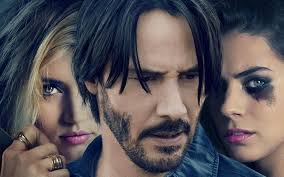

30/11/15 Update
Today, our group discussed ideas for actors & location shots which Megan will hopefully complete by December 1st - most convenient due to the chosen location being situated around our group members house. Additionally, we completed our progress report - presented through written formats & mind-maps to establish the plot for our production.
Our plot was initiated through our pilot survey results (allowing us to contrast the target audience preferences) & an existing students production work, which we chose to base our textual analysis on. - Dan Neary
.

.
Saturday, 28 November 2015
Friday, 27 November 2015
Focus Group
In horror films, what codes & conventions are most likely to impact the audience?
Editing that is of a faster pace
Reflections, dark low-key lighting
An Intriguing narrative
Subversions of stereotypes
Diegetic sound that influences
Discuss the expectations of the narrative in an opening to a horror film
Events based on real-life situations
Relatability of the plot to the audience
Counter opinion - subvert from cliché
Sudden jump-scares
Flash-backs for clear structure
Do horror films differ from the thriller genre?
Editing is of a slower pace
Similarities of colour representations
Low-key lighting
Horror introduces the set clearly
Would a female antagonist engage the audience less?
No, instead it encourages a different interpretation of the characters as oppose to the cliché of a male dominated lead role.
No, as it allows the stereotype to be subverted which would more than likely entice the audience as it is an aspect that is unusual for movies in the present day.
- Dan - Megan - Charlie
27/11/15 Update
In this lesson, I've uploaded my "Hypodermic Needle Model", which Megan and Dan will both also be using, I'm also going to borrow some work from Megan and Dan's blog, to complete my "audience profiles" section.
Wednesday, 25 November 2015
25/11/15 Update
This week, I will be looking to complete some parts of my theoretical research, including the audience theories, and narrative theory. I will also be e-mailing a professional, as I'm determined to expand the type of work I have done.
Tuesday, 24 November 2015
My Influential Figures

I have a few influential figures. One of which is the famous horror director, George Romero. He is known for creating the sub-genre in horror based around the undead. Romero directed Dawn of the Dead (1978). He also made a cameo appearance in Call of Duty Black Ops, as the creators of the game wanted him to represent the undead side-game. This would attract customers who admire his work.
George Romero's most famous film he directed, was Dawn of the Dead. A remake of this film was also made in 2004, sparking surprisingly high ratings from critics. The same year, a spin-off version was made named "Shaun of the Dead". This is my favourite film of all time, and without Romero, it wouldn't exist. I've always been a fan of the undead genre, therefore I have to look at Romero for inspiration. Many people couldn't imagine the horror genre without Romero's work, and several films, TV shows and games, are all indirectly inspired from his films.
 Another influential figure, this time an actor, is Andrew Lincoln. He plays the lead role in AMC's The Walking Dead, as Rick Grimes. Andrew Lincoln is a British actor famously known for his roles in many famous films and TV shows.
He inspires me because of his role in The Walking Dead, as it is my favourite TV show. I've watched 2 series with Andrew Lincoln in, the other was "Teachers". This isn't part of the horror genre, however because I saw him in that first, I felt a personal connection to him in The Walking Dead, therefore leading to him being so influential to me. Despite my man crush on Andrew Lincoln, he also gives a lot to the horror genre as a whole. He's a very convincing actor, who is also very versatile, having successfully played major roles in horror, comedy and romance productions. The Walking Dead is the most popular horror TV show in Britain and the USA. According to IMDb, the Walking Dead averages a score of 8.6/10 for each episode. Andrew Lincoln adds a lot to the horror genre as a whole. This is because he gives everything he has into his performances, making his character very believable. Additionally, he is a very likeable man in real life, therefore people warm to him, leaving him with millions of fans worldwide. This connects people to the show, and some that may have not preferred the horror genre before, will be coaxed into watching it now, due to their favourite actor being in it.
Thursday, 19 November 2015
Wednesday, 18 November 2015
Tuesday, 17 November 2015
Auteur Theory
Auteur Theory
Auteur theory is the theory of filmmaking in which 'the director is viewed as the major creative force in a motion picture' and it arised in France in the late 1940's. It states that the director, who oversees all audio and visual elements such as camera placement, blocking, lighting and scene lengths, is more to be considered the ''author'' of the movie than is the writer of the screenplay. These fundamental visual elements convey the message rather than the plot line. An auteur is someone whose style and practise is particularly distinctive such as Alfred Hitchcock.
Alfred Hitchcock is one of my influential figures and he is widely considered to be an auteur. He has reached auteur status by being the 'Master of mystery and suspense' as he likes to play with the audience's nerves through his directorial style. His style involves the visual expression of thought and psychology. Hitchcock's signature technical style involves the use of camera viewpoints , elaborate editing , a soundtrack to build suspense and he focuses on the creation of set pieces where he is able to demonstrate his talent for detail and suspense. He was known to collaborate with the same people when making his films and this allows him to create a consistency with his filmography.
 This mind map summarises the ways in which applying the Auteur theory to our own production would be effective. This is something we would have to consider carefully when deciding on final ideas for our production as it is important to create a distinctive style that will keep the audience engaged and wanting more. - Megan West
Alfred Hitchcock is one of my influential figures and he is widely considered to be an auteur. He has reached auteur status by being the 'Master of mystery and suspense' as he likes to play with the audience's nerves through his directorial style. His style involves the visual expression of thought and psychology. Hitchcock's signature technical style involves the use of camera viewpoints , elaborate editing , a soundtrack to build suspense and he focuses on the creation of set pieces where he is able to demonstrate his talent for detail and suspense. He was known to collaborate with the same people when making his films and this allows him to create a consistency with his filmography.

Wednesday, 11 November 2015
Textual Analysis of Student's Work
Captive
Captive is an AS Media production made by Kieran Panchal, Josh Manley, and Isaac Randall. It focuses on a young man, strapped to a chair in an abandoned broken building, who sees a demonic child holding a toy doll. The production is two minutes long, and has many good effects, and just a few negatives. One positive that is present throughout is the quality of the camera. It produces an HD quality films which creates a brilliant effect for the whole of the film. At the start, when blood is dripping down the boy's face, it's made to look very realistic due to the camera being able to focus on several different details. The make-up and camera combined make a more powerful intro to the production. This is because of how well done the make-up is. The blood dripping out of his mouth looks stiff, as if it's been in his mouth for a long time. The boy's face looks battered and bruised too, which suggests that he has been in a fight. We only see flashbacks of all that happened before he got to the chair. It appears that he was acting as a photographer or journalist, and got captured whilst on the job, he was then held Captive, hence the title of the movie. The title of the movie pulls you in, as with one word, it's more powerful, and really gives you an insight to what it is about. It's relevant to the content of the film too.
There is limited dialogue in this production. The only words said are "HELP", which shows the desperation inside of him. These words are screamed, making the whole scene more intense, as it happens towards the climax of the film. The rest of the production is rather quiet, with tension building music planted into it, which has a very good effect on the production, as it makes it clear it's a horror film. There are a variety of different shots used in this production, ranging from extreme close ups to long shots. Most of them are close ups due to the fact that the whole thing takes place in one small area, bar the flashbacks. The flashbacks themselves may have been implemented so that the producers of the film could shoot more scenes from different angles. Without them, the film would be very empty, with very few memorable moments. The guy acting didn't have to do much that required a lot of skill, however what he does act is done well, and is believable throughout. The use of CCTV looking cameras is exceptional, as it suggests that him being there is all set up, and the antagonist planned for somebody to end up there. We also don't see any weapons around, therefore we can only be left to guess what will happen to him.
Despite all of these positives there are some negatives of this production. Whilst the shots are good, as is the camera quality and make-up, the actual content leaves a lot to be desired. The shot looking out of the window is good, when you see the possessed child. However, besides that nothing much really happens.
Captive is an AS Media production made by Kieran Panchal, Josh Manley, and Isaac Randall. It focuses on a young man, strapped to a chair in an abandoned broken building, who sees a demonic child holding a toy doll. The production is two minutes long, and has many good effects, and just a few negatives. One positive that is present throughout is the quality of the camera. It produces an HD quality films which creates a brilliant effect for the whole of the film. At the start, when blood is dripping down the boy's face, it's made to look very realistic due to the camera being able to focus on several different details. The make-up and camera combined make a more powerful intro to the production. This is because of how well done the make-up is. The blood dripping out of his mouth looks stiff, as if it's been in his mouth for a long time. The boy's face looks battered and bruised too, which suggests that he has been in a fight. We only see flashbacks of all that happened before he got to the chair. It appears that he was acting as a photographer or journalist, and got captured whilst on the job, he was then held Captive, hence the title of the movie. The title of the movie pulls you in, as with one word, it's more powerful, and really gives you an insight to what it is about. It's relevant to the content of the film too.
There is limited dialogue in this production. The only words said are "HELP", which shows the desperation inside of him. These words are screamed, making the whole scene more intense, as it happens towards the climax of the film. The rest of the production is rather quiet, with tension building music planted into it, which has a very good effect on the production, as it makes it clear it's a horror film. There are a variety of different shots used in this production, ranging from extreme close ups to long shots. Most of them are close ups due to the fact that the whole thing takes place in one small area, bar the flashbacks. The flashbacks themselves may have been implemented so that the producers of the film could shoot more scenes from different angles. Without them, the film would be very empty, with very few memorable moments. The guy acting didn't have to do much that required a lot of skill, however what he does act is done well, and is believable throughout. The use of CCTV looking cameras is exceptional, as it suggests that him being there is all set up, and the antagonist planned for somebody to end up there. We also don't see any weapons around, therefore we can only be left to guess what will happen to him.
Despite all of these positives there are some negatives of this production. Whilst the shots are good, as is the camera quality and make-up, the actual content leaves a lot to be desired. The shot looking out of the window is good, when you see the possessed child. However, besides that nothing much really happens.
Monday, 26 October 2015
Scream Textual Analysis
Scream (1996)
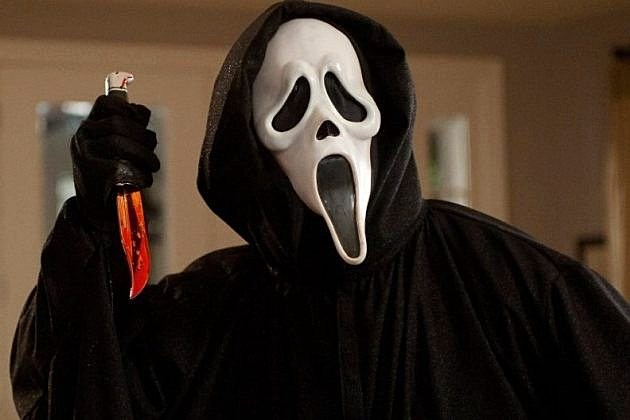
The opening of the movie is slow paced, contrary to the usual action found in "slashers". We meet a girl named Casey, played by the world famous Drew Barrymore. As she is such a well known actress, most people watching this would think that she would be playing the protagonist, however we find out that this is not the case. The movie begins with a phone ringing, and Casey picks it up immediately. This sound is diegetic, meaning it is a sound that's heard by us, and the character in the film. When we first see Casey, we can tell that she is alone in the house. As she is young, we feel like she is in danger. Her appearance is conventional of a horror film, as her age and blonde hair connotes that she is a "damsel in distress". She's also wearing bright coloured clothing, which suggests that she is a good person, as black and red are typically used when it comes to villains. The interior of the house is bright too, and is full of fancy objects, which may connote that Casey and her family are rich. This is obvious as they have a cordless phone and a computer, which back in the mid 90s were very expensive. The large windows create a sense of vulnerability too, as it makes the house less secure, as somebody could easily smash them and get inside. The lighting in the house is very bright, with there always being a clear view of what's in the background. No special effects are used, which emphasises the rawness of the film, and they aren't needed to create tension either. We find out later that she still lives with her parents, making her seem less of an adult, as she still doesn't have that independence yet.
The person's voice on the phone is very creepy, and has a sinister tone to it. We can tell that they are male because of the deeper voice. This helps to create a harrowing atmosphere, as we can guess that he is the villain, due to Casey not knowing who he is. To further emphasise the eerie atmosphere, the scene jump-cuts to show us that it is dark outside, which generally makes things scarier. Outside, there is a swing, swaying slowly. This gives the impression that somebody had not long been there. The swing is also creaking, which adds suspense to the scene, as it is painfully quiet, with that being the only noise you can hear from outside of the house. As well as this, it makes Casey seem isolated, as we can't hear her, therefore if she got into any trouble, nobody would catch onto her screaming. After she puts the phone down, he calls back, and he does it once again. This is to make the audience, and Casey herself feel uncomfortable, as it's obvious that he is stalking her.
In the next part of this scene, Casey starts to cook popcorn. This represents the opening as a whole, as the foil starts to expand, before eventually catching fire. This is typical of horror films, to start off slowly, before boiling over and reaching its climax (the eruption of flames). Shortly after leaving the popcorn, the guy on the phone asks what her favourite scary movie is, and she replies "Halloween". This basically tells us that we are watching a horror film, and to mention Halloween and "Nightmare on Elm Street" is very brave, as everybody knows how good those films are, therefore it creates high expectations. Casey picks up a knife in this part, which connotes death, and foreshadows what happens to her later on. The director (Wes Craven) added the popcorn to symbolise the increasing intensity of the scene, and it is also an unusual thing to use in this situation.
The first moment of horror comes when the man on the phone says "I wanna know who I'm looking at". This technique is used to make the audience gasp. We've just seen a third person shot of Casey walking around her empty house, but now it is clear that the villain is near her, however we have no clue where he is, which is effective as we can relate more to Casey. As soon as he says this, music starts for the first time, increasing the tense atmosphere that was already looming. The music is extremely low pitched, and is almost inaudible at first. This adds tension before the climax of the opening, as its still quiet. However, as the scene goes on, the music changes to from a low to high pitch, and gets much much louder, making it very frantic, as it combines well with Casey running around. String instruments are used for these, which is conventional of a horror film. This music is non-diegetic, meaning that Casey would not hear it in the scene. The third person shot adds a lot to this, as you can always see her surroundings, expecting something to pop out, but it never does, again creating suspense. Most of the shots used in this scene are medium close-ups however, so that we can see Casey's reactions in detail.
Because of this, Casey puts the phone down once again, yet the villain keeps ringing. When she next picks it up, he threatens her with very explicit language. This makes the scene all the more intense, as when we first heard him, he sounded relatively normal, but now we can tell that he is completely psychotic. Casey threatens to call the police, but it comes to light that her house is isolated, as the guy says "They won't get to you in time, you're in the middle of nowhere". We feel more connected to Casey after this as she appears to be a sweet innocent girl, yet she's getting targeted for what seems to be no reason.
Sunday, 25 October 2015
Saw II Textual Analysis
Saw II
Saw II is the sequel to the vastly popular "Saw". It revolves around a serial killer nicknamed "Jigsaw"who suffers from terminal cancer, therefore he targets people who take their life for granted. He is creative in the way he kills people, using contraptions that are shocking to see, which is what makes Saw so intriguing to horror fans. The film is rated 18, because of extreme violence and gore.
Saw regularly shows violent scenes of people being brutally murdered, which is a sub-genre named "torture porn", which appeals to audiences who love gore. The target audience would stereotypically be male, probably between 18 and 30 years old, as they are more likely to be into these kinds of films.
The introduction I'm analysing focuses on a character named Michael. We haven't been introduced to him before, so we don't really feel anything towards him at the start. He begins sat on a chair, with a fly trap like device on his head. We can tell it is a horror movie because of the blood on his face, along with the dark, murky looking background. A TV switches on by itself, when a guy inside a creepy mask speaks to the camera. We know it's the villain because he says that he did this to Michael. This scene is very eerie, which is emphasised by the villain, as when he speaks, the masks mouth doesn't move, so there is just a lifeless face staring at you the whole time. Jigsaw explains that the device around Michael's neck will snap shut on him, and the key is behind his eye. We can see the sharp spikes on the trap, so we can imagine what will happen when it closes. Jigsaw states that there is a knife in a box across the room, and Michael must carve his own eye out to get the key, so that the fly trap doesn't end his life. We can tell that Jigsaw is a psychopath because of his emotionless voice in the video. At this point we're all worried for Michael and what will happen to him. He screams out for help, showing the fear and desperation he is going through. This scene is different to most other horror films, as Jigsaw told us how Michael is going to die, so we know what will happen to him, rather than it be unexpected. This leaves just one question on the viewers mind. "Will he make it out alive?" The chances are low, as Michael lashes out in hysteria, starting a 1 minute timer...
As soon as the timer starts, there is a constant countdown, letting the audience know that time is ticking, The ticking gets louder as the scene goes along, alerting us that Michael is getting closer to his death. The sounds in this scene converge to create an intense atmosphere, Michael smashes the TV, which is loud, as is the screeching of metal, this gives a very rugged feeling around the scene. Michael's screams are distorted which sets a non-linear structure. A common partnering is shown in this scene, that being good vs evil. However it is not that simple, as we can tell from Jigsaw's speech that Michael has done some wrong, however it is not enough to deserve his treatment. We know he's done wrong judging by Jigsaw's motive, which we learn about in the first movie. The sound of heavy breathing further intensifies the scene as we can identify the sheer terror Michael is experiencing.
Many high camera angles are used in this scene, which looks down on Michael, making him seem weak, which is typical with these types of shot.


Saw II is the sequel to the vastly popular "Saw". It revolves around a serial killer nicknamed "Jigsaw"who suffers from terminal cancer, therefore he targets people who take their life for granted. He is creative in the way he kills people, using contraptions that are shocking to see, which is what makes Saw so intriguing to horror fans. The film is rated 18, because of extreme violence and gore.
Saw regularly shows violent scenes of people being brutally murdered, which is a sub-genre named "torture porn", which appeals to audiences who love gore. The target audience would stereotypically be male, probably between 18 and 30 years old, as they are more likely to be into these kinds of films.
The introduction I'm analysing focuses on a character named Michael. We haven't been introduced to him before, so we don't really feel anything towards him at the start. He begins sat on a chair, with a fly trap like device on his head. We can tell it is a horror movie because of the blood on his face, along with the dark, murky looking background. A TV switches on by itself, when a guy inside a creepy mask speaks to the camera. We know it's the villain because he says that he did this to Michael. This scene is very eerie, which is emphasised by the villain, as when he speaks, the masks mouth doesn't move, so there is just a lifeless face staring at you the whole time. Jigsaw explains that the device around Michael's neck will snap shut on him, and the key is behind his eye. We can see the sharp spikes on the trap, so we can imagine what will happen when it closes. Jigsaw states that there is a knife in a box across the room, and Michael must carve his own eye out to get the key, so that the fly trap doesn't end his life. We can tell that Jigsaw is a psychopath because of his emotionless voice in the video. At this point we're all worried for Michael and what will happen to him. He screams out for help, showing the fear and desperation he is going through. This scene is different to most other horror films, as Jigsaw told us how Michael is going to die, so we know what will happen to him, rather than it be unexpected. This leaves just one question on the viewers mind. "Will he make it out alive?" The chances are low, as Michael lashes out in hysteria, starting a 1 minute timer...
As soon as the timer starts, there is a constant countdown, letting the audience know that time is ticking, The ticking gets louder as the scene goes along, alerting us that Michael is getting closer to his death. The sounds in this scene converge to create an intense atmosphere, Michael smashes the TV, which is loud, as is the screeching of metal, this gives a very rugged feeling around the scene. Michael's screams are distorted which sets a non-linear structure. A common partnering is shown in this scene, that being good vs evil. However it is not that simple, as we can tell from Jigsaw's speech that Michael has done some wrong, however it is not enough to deserve his treatment. We know he's done wrong judging by Jigsaw's motive, which we learn about in the first movie. The sound of heavy breathing further intensifies the scene as we can identify the sheer terror Michael is experiencing.
Many high camera angles are used in this scene, which looks down on Michael, making him seem weak, which is typical with these types of shot.
Friday, 23 October 2015
Sinister Textual Analysis
 Sinister (2012)
Sinister is a supernatural horror film, produced in 2012. It follows the story of Ellison Oswalt, a true crime writer, who moves his family into a home in which a different family of four were hung on a tree. He comes across a box full of tapes, showing many different violent murders. He tries to investigate them while balancing it with his family life. The film was directed by Scott Derickson. It included actor Ethan Hawke, who plays the lead role Ellison. Sinister was a massive box office success, bringing in $77.7 million as of October 2015. This contributed to a huge profit, as the film had only a $3 million budget in the first place. Me, Megan and Dan decided to analyse the introduction to this as it is simple, yet effective, and covers many themes for a horror movie in just the first 10 minutes.


The movie starts by showing us a family of four under a tree, with hoods over their heads and nooses around their necks. The branch is then sawed off, causing the family to be pulled into the air, and strangling them. We can tell that they're dead as when they're first lifted into the air, they are flailing about, but eventually their bodies become limp. This scene is powerful. It is roughly one minute long, and all you can hear is the whirring of the film tape, this makes it very eerie as we can't actually hear what is going on, leaving us on edge. The identity of the supposed villain is kept hidden during the opening scenes of the movie too, leaving us wondering what they will be like. This scene is also very vague, it leaves us asking questions, such as - Who are the people being hung? Who did it? And, why did they do it?
The colours in this scene play a big part in creating an eerie atmosphere, they are primarily green and grey, which are dark. We're made to feel on edge as we cannot see past the large trees in the background. There are a few seconds in this scene at the end where nothing is happening, which keeps us on edge, as if we are going on horror stereotypes, we would expect a jump-scare, which didn't actually come. This shot is filmed with an old fashioned camera, we know this as it is the only sound we can hear, helping us to detect the genre of the movie, which is clearly horror. Due to the pauses before and after the hanging, we can tell that it is raw footage, and has not been edited in any way (if you're looking at the perspective from inside the movie).
The second part of the introduction is where we meet Ellison and his family. We see that he has a wife, a 12 year old son, and a 7 year old daughter. The mise-en-scene helps us to understand what is going on, there are cardboard boxes everywhere, which signifies that they are moving into a new house. This helps us to relate to the characters in the film, as the place is new to them as well, so everything is unexpected. The camera follows Ellson in third person, as he strides around the house, smiling and talking to his family, this shows us that they appear to be happy altogether. It also makes us feel uneasy however, as at this point, we know it is a horror movie, therefore we assume that something bad will eventually happen to them. We meet two other characters here too, the police officers. They mention that the house is in the middle of nowhere, which makes the family seem isolated and vulnerable.
The target audience for this movie is the same sort of target audience we're looking at for our production. The age rating is 15, which is surprisingly low in my opinion, when you look at all of the graphic content included. This film also links to our demographic as it joins us in trying to appeal to people who enjoy suspenseful horror, rather than those with mindless jump-scares littered throughout.
Tuesday, 13 October 2015
Response to the brief
We have chosen to produce a 2 minute introduction to a film originally created by ourselves. We chose this because we have a lot of experience in watching films, whereas with the magazine, we believed we're more knowledgeable when it comes to moving image..
We chose the horror genre, as I personally love horror films, therefore I have the potential to come up with lots of creative ideas. With a very limited budget, we'll have to go down the classical horror route, using weather to create an eerie effect, (pathetic fallacy). The target audience would be teenagers/young adults, who are able to appreciate the horror genre.
We would have to consider mise-en-scene for this, as we cannot produce brilliant special effects, therefore costumes will be a route we will consider. One horror film that is inspiring me is Sinister, it has a brilliant opening to it, with little special effects. The lack of sound in the intro ironically makes the scene way more intense. We are yet to decide on location, however I believe filming in an abandoned location will be most effective, as there is always a sense of helplessness. We've considered filming in the evening too, as it will be relatively dark, but not so dark that we need many lights everywhere to get a high quality picture.
We chose the horror genre, as I personally love horror films, therefore I have the potential to come up with lots of creative ideas. With a very limited budget, we'll have to go down the classical horror route, using weather to create an eerie effect, (pathetic fallacy). The target audience would be teenagers/young adults, who are able to appreciate the horror genre.
We would have to consider mise-en-scene for this, as we cannot produce brilliant special effects, therefore costumes will be a route we will consider. One horror film that is inspiring me is Sinister, it has a brilliant opening to it, with little special effects. The lack of sound in the intro ironically makes the scene way more intense. We are yet to decide on location, however I believe filming in an abandoned location will be most effective, as there is always a sense of helplessness. We've considered filming in the evening too, as it will be relatively dark, but not so dark that we need many lights everywhere to get a high quality picture.
Tuesday, 15 September 2015
Subscribe to:
Posts (Atom)